Biometric Brain Mapping
Fingerprint-based intelligence and personality mapping — understand your innate learning style, strengths, and behavioral patterns.
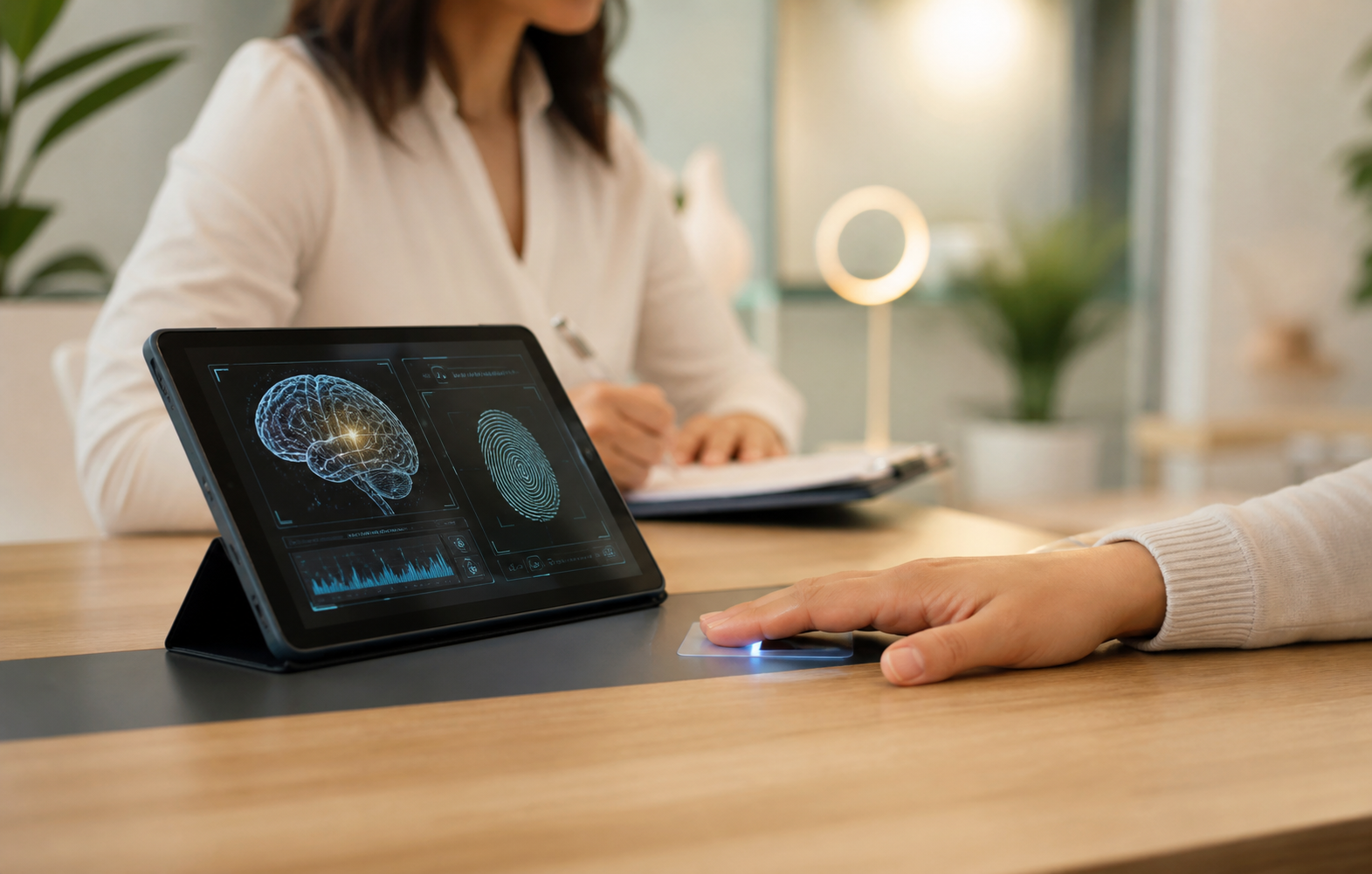
Based on Dermatoglyphics, Neuroscience and Pediatric Psychology
Maps DISC personality type and Multiple Intelligences (MI)
Reveals both conscious behaviour and subconscious talent patterns
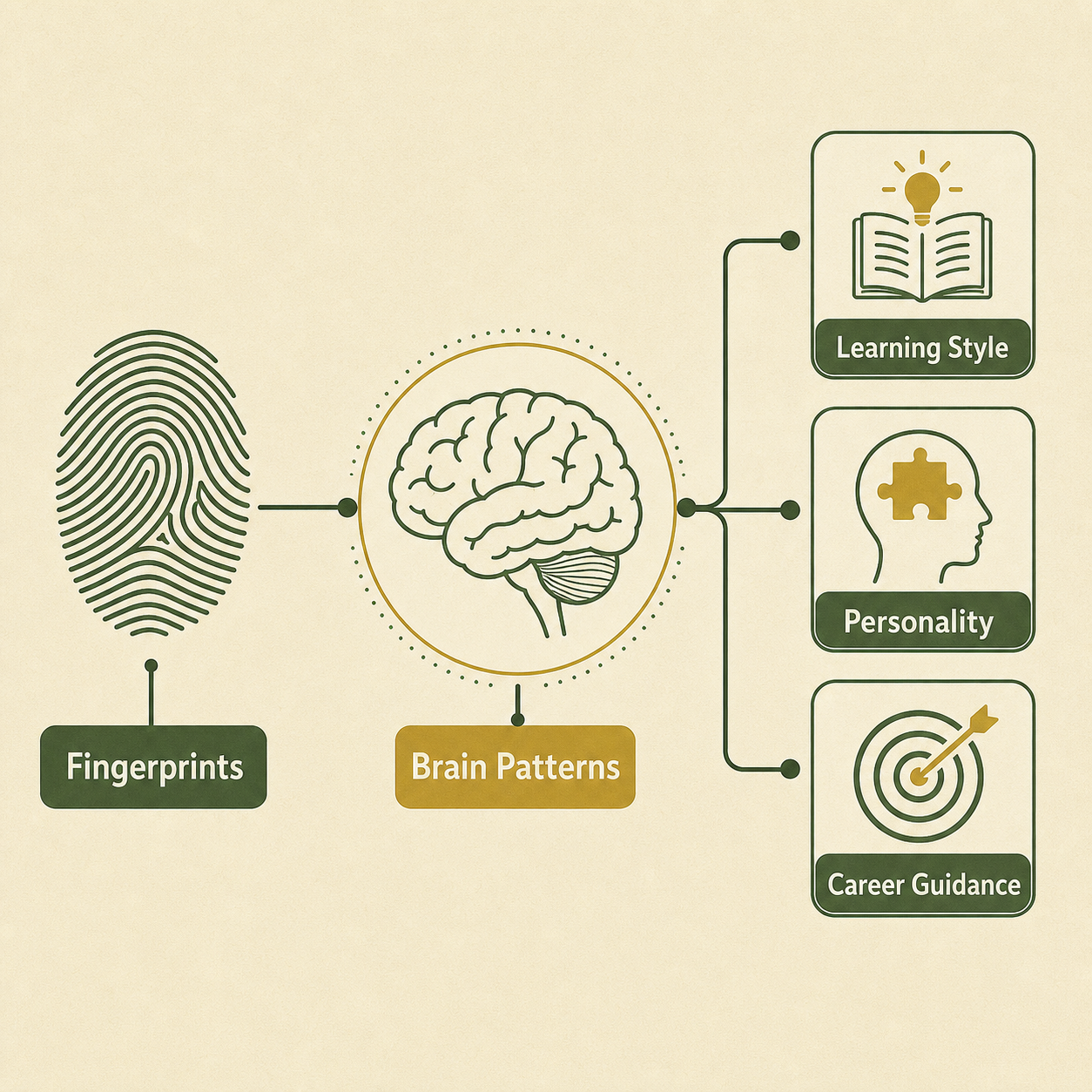
How fingerprint patterns map to brain regions and intelligence types
Diagram sourced from the clinic’s reference material. Shown here for orientation before your session.
Biometric Brain Mapping
Neuraal Quest uses dermatoglyphics, neuroscience and pediatric psychology to map your innate intelligence, dominant learning style and personality type through a scan of all ten fingerprints.
How It Works
All ten fingerprints are scanned and analyzed. Fingerprints form during the embryonic stage and are directly linked to the brain's neural network development — the more neural connections formed, the more efficiently the brain processes information. The resulting report maps your fingerprint patterns against two established frameworks.
- DISC Theory (Dr. William Marston) — identifies your behavioral and communication style
- Multiple Intelligences (Dr. Howard Gardner) — identifies your dominant intelligence areas
- Generates a statistical report of innate strengths, learning preferences and growth areas
- Reveals both conscious behaviour patterns and subconscious talent potential
What the Report Reveals
The assessment acts as a mirror — showing you yourself clearly, often for the first time. It covers the full range of how you think, feel, learn and relate to others.
- Analytical vs. creative brain dominance
- Introvert vs. extrovert tendencies
- Emotional vs. problem-solving personality style
- Dominant learning habits and preferences
- Specific strengths and areas for improvement
- Communication style and relationship patterns
Who It Is For
The assessment is designed for three groups, each with a distinct outcome.
- Children — helps parents understand innate abilities and make the most of the golden period of early learning
- Adults — helps individuals and couples understand their own (and each other's) behavior patterns for better relationships and self-awareness
- Corporates — provides an employee profile to guide right-placement and team-fit decisions